sulamani Temple
north plain, bagan
central MYANMAr, Southeast Asia
september 3, 2009


sulamani Temple
north plain, bagan
central MYANMAr, Southeast Asia
september 3, 2009

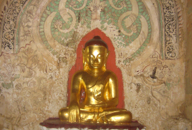
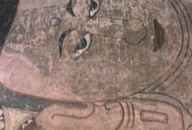
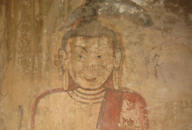
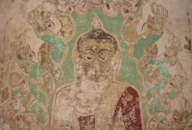
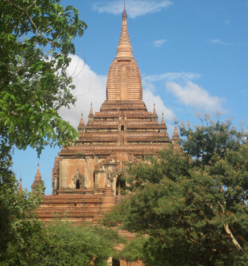
Sulamani Pahto is one of the most attractive temples in Bagan, its warm brick exterior is in the later style dating from c. 1181. Known as the “crowning jewel”, the style of the temple combines the horizontal plane of the early period with the more vertical architecture of the middle period, with receding terraces which create a pyramid effect. This structure houses some of the best wall paintings in Bagan, an astonishing amount of well-preserved murals, wall paintings, and vault decorations The interior passageways contain large frescoes, some with huge stylized reclining Buddhas. The temples and paya on the Bagan plains are considered to contain the largest body of murals in Southeast Asia, dating from the 11th-14th centuries. At least 350 temples of this period still have mural paintings on the walls or under the vaults.. The paintings in all the structures present the essence of Buddhism to the faithful, and were integrated with the architecture in the religious sites, much like the church paintings found in Renaissance and Baroque architecture of Europe. Popular themes of all these paintings focus on the Jakatas, or stories of the 547 lives of Buddha, prior to his reincarnation as Prince Disshattha. Another favorite subject of the paintings, are the Eight Grand Events in the Life of Budha Gotama.
Note: The painting process:
The paintings were applied a secco (to a dried wall surface). In the 11th & 12th centuries, the plaster applied to the brick walls was composed of a mixture of clay & sand with organic materials such as rice husks. This was given a final coating of the slaked lime & allowed to dry. Areas were divided into grids by snapping cords, first horizontally & then vertically. Next an outline was made with a black or red pigment prior to paintings. Pigments employed were white from lime, black from soot and fish gall, red from red ochre & cinnabar, yellow from orpiment, blue from copper sulphate, and green from copper sulphate and orpiment. The powdered and ground pigments were mixed with water & an adhesive, probably a natural resin. Later in the 13th -18th centuries, to ensure that the plaster would adhere, the brick walls were chipped. After the subjects were outlined, the colors were filled in and the details added. Perspective was achieved by the relative positioning of figures, such as overlapping, not by the western vanishing point employed to give the illusion of space.
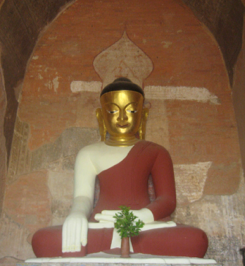
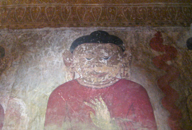
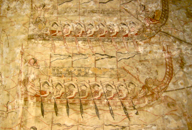
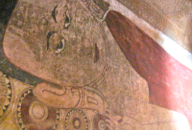
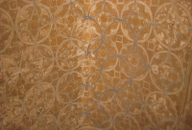
PHOTOS: Left Column: 1. Decorative, patterned paintings in the vault of the temple. 2. Depiction of a Buddha figure. 3. Buddha with stylized naga. 4. Wall with a huge mural of the reclining Buddha. Center, Top: View of the spire of Sulamani Temple. Center, Bottom: A seated Buddha with fragments of wall paintings behind it. Right Column: 1. Golden Buddha figure with wall paintings embellishing it. 2. Detail: mural depicting boats with oarsmen rowing. 3. Fragments of a wall painting of Buddha. 4. Detail, the head of the Reclining Buddha depicted in a wall painted mural.

Murals