cathedral
St. Just & St. Pasteur
Narbonne
LANGUEDOC-ROUSSILLON
midi pyrénées, france
europe
May 3, 2011


cathedral
St. Just & St. Pasteur
Narbonne
LANGUEDOC-ROUSSILLON
midi pyrénées, france
europe
May 3, 2011

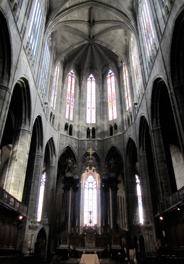
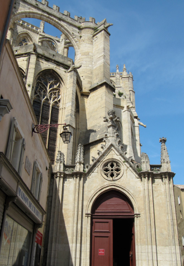
The site where the Cathedral in Narbonne stands has been an important site since early Christian times*. The Cathedral of St. Just and St. Pasteur in Narbonne, was begun in 1272 on the site of a Constantinian basilica dating from 331, destroyed by fire in 441. A Latin basilica was constructed, dedicated in 445 and re-dedicated in 782 to the young Spanish martyrs, Saint Justus and Pastor. Little of this building remains. A Carolingian cathedral was then erected in 890, the restored steeple still visible from the cloister. After this cathedral fell into ruin, Pope Clement IV, former Archbishop of Narbonne, decided to build a Gothic cathedral in 1268. The construction began in 1272 to fulfill his vision that the cathedral would be a “monument made in the magnificent style of the Kingdom of France”. The choir was continued in 1332, but the rest of the building was never completed. There were several reasons for the plan being thwarted. The first, was economic, Narbonne’s prosperous port city was silted in. Secondly, the magnificent design of the cathedral was also a magnificent size, requiring the destruction of the old Roman wall to make room for the nave that was never built, as the legal battles surrounding this need were never settled judicially. As the cathedral stands today, partially complete, Henry and I found the first stage with its chapels and large choir to be extraordinary, especially since the height of the cathedral is in proportion to the overall scale of the magnificent plan. The imposing choir with four bays is 55 meters/188 feet long and 48 meters/157 feet wide. It has a middle aisle with rib vaults over 40 meters/130 feet high, flanked by 2 side aisles and 2 series of four 5-sided chapels whose vaults are half that height, 20 meters/65 feet high. The extended ambulatory leads to five radiating chapels of similar floor plans, each larger than those of the the side chapels. The bell towers, erected during the 14th century, were restored in the early the 15th century.
*Constantine, known as Constantine the Great (c. 274-337) was the first Roman emperor to be converted to Christianity and in 324 made Christianity the empire’s state religion. In 330 he moved his capital from Rome to Byzantium, renaming it Constantinopolis (Constantinople). He is venerated as a saint in the Orthodox Church.
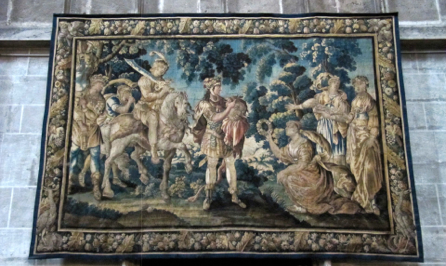
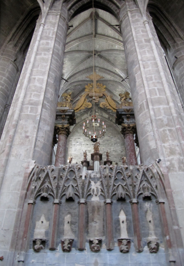
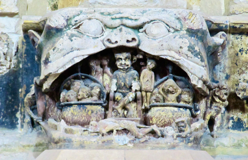
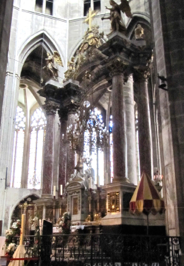
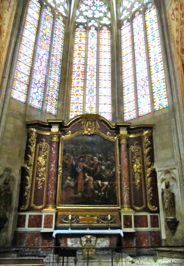
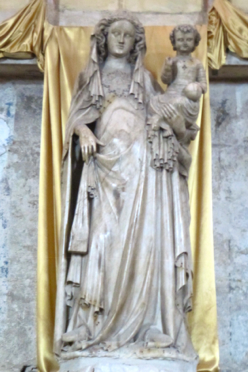
PHOTOS: Left Column: 1. Gobelin tapestry depicting the Old Testament story of David and Goliath. 2. One of five larger altars that fill the apse behind the choir of the church. The nave was never built. 3. Exterior view of the apse and choir of the unfinished cathedral. Center, Middle: Madonna and Child, a 14th century sculpture in the central chapel in the apse behind the choir of the cathedral. Center, Bottom: Detail: 14th century Great Reredos, uncovered and revealed in 2000 after being covered for centuries. The sculptural panels on the back of the altar depict 200 individual figures in an area of more than 27 meters/30 yards. This particular group, positioned beneath the 14th century figure of the Madonna and Child represents figures within the head of a monster or satan. Right Column: 1. Side aisle of the cathedral, looking toward one of the altars in the apse, behind the choir, which stands through the arches on the left side of the photo. 2. View from behind the choir. 3. View of the altar within the choir of the unfinished cathedral.

A Choir without a Nave