hathi howdah Gallery
MEHRANGARH FORT
JODHPUR, RAJASTHAN, WESTERN INDIa
DECEMBER 17, 2009


hathi howdah Gallery
MEHRANGARH FORT
JODHPUR, RAJASTHAN, WESTERN INDIa
DECEMBER 17, 2009

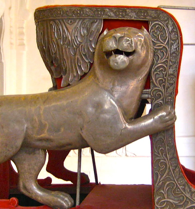
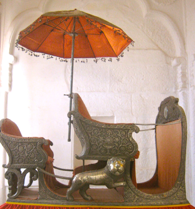
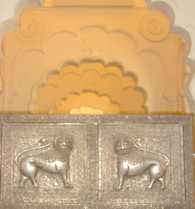
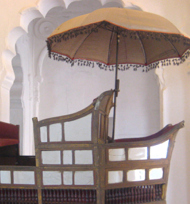
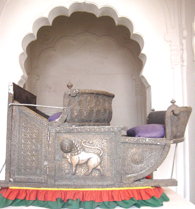
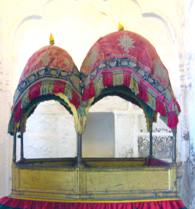
The collection of Hathi Howdah, or elephant seats, which Henry and I toured at the Mehrangarh Fort Gallery are considered to be the best in all of India. This display is historical in that it reveals the ceremonial relationship between the elephant and the various rulers of Rajasthan. The elephant, long a subject of Indian epics, was used for ceremonial purposes, as weapons in warfare, and as movers of heavy loads, including trees, canons, and artillery. During wartimes, the elephants were extremely useful as they could trample the enemy with their feet. With the trunk, an elephant could pick up a man and his horse, or could fight with swords attached to the trunk. In India, elephants, humans and Hindu gods have had a long relationship with one another. Even today, decoratively painted elephants can be seen on the streets in every city we visited, including Delhi. Henry and I have had our own mahout training in Thailand, and this special partnership between human trainer and the elephant is woven into the culture of India as well. This lifelong relationship with the elephant and his mahout, and the bond of trust established with the animal has brought continuity in the elephants’ willingness to be of service to humankind. These magnificent animals have proven themselves to be intelligent, highly trainable, possessing incredible strength and memory. With a mahout sitting on the neck of an elephant, giving the animal verbal and physical commands using the feet, an elephant also receives orders and direction from the Ankush, a tool with a hook and spike. Royalty in India rode elephants in ceremonies, with a howdah, or special chair designed to be fastened to the elephant’s back, in front of which the mahout would sit astride the elephant’s neck. These chairs, wooden boxes in two parts, were elaborately designed, often covered in gold or embossed silver sheets. Two partitions in this box-like seat allowed the maharajah to ride in the more roomy forward compartment, protected by a shield. A security guard, disguised as a servant wielding a fly swatter, rode behind him; although, in more modern times, an aide-de-camp would have sat in the rear seat. Some of the howdahs displayed in the Mahrangarh Fort’s gallery were covered in embossed silver. Henry and I agreed with one another, that the most charming of these elephant seats we saw, had protective umbrellas or shaped canopies as protection from the sun.
PHOTOS:
All the Hathi Howdah are of historical significance, however, the only one named was the silver Hathi Howdah, originally belonging to Mughal Emperor Shajahan. It was presented to Maharaja Jaswant Singh on December 18, 1657.

Elephant Seats