ventiane
Ventiane Prefecture
Northern Laos, southeast asia
august 11 - 16, 2009


ventiane
Ventiane Prefecture
Northern Laos, southeast asia
august 11 - 16, 2009
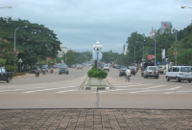
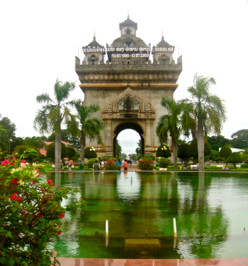
Before the arrival of the French in Indochina the city was Viang Chan. In 1900, the city became known as Vientiane, the French spelling, when it became the administrative seat of Laos in French Indochina. The translation of the Lao words meant “city or place with walls” and “the moon whose crescent evokes the curve of the Mekong River” upon which the city was built. A medium sized city with mostly low-rise buildings, the population is just over half a million people. Vientiane is the capital city of Laos and is the seat of its government, Lao Peoples Democratic Republic. The one-party communist regime is lead by the executive office, President Choummaly Sayasone, who is assisted by a Prime Minister in charge of the Ministry Council. The people elect the 115 members of the National Assembly , which is the legislative branch of the government, “guarantor of the constitution”. The largest, most prominent, and most opulent building under construction, when Henry and I visited, was the Prime Minister’s building, a multi-storied office building in traditional Southeast Asia architectural style, built with offices for the ministry. There are many embassies in the city, including a bunker styled American Embassy and a large colonial styled French embassy, hidden behind walls on a large tract of land. The Swiss embassy is located in the offices of a travel agent we visited, according to a sign posted on the door. There are quite a number of Buddhist temples, and a street with colonial styled buildings, the remains of the French colonial days. The city seems to have grown helter-skelter, in spite of the urban planning which took place under the French. In the late 19th century, the French reconstruction of Ventiane began with a grid plan, administrative buildings, and a few colonial style mansions. Two post-French additions to the city make an oblique reference to Paris. Avenue Lang Xang, a wide boulevard with esplanade, is nicknamed the “Champs Elysée”. The Patuxi, or Victory Arch, stands prominently in a park setting at Avenue Lang Xang. Nicknamed the “L’Arc de Triomphe”, and “The “Vertical Runway”, because it was made with concrete intended for the airport, supplied by the USA. Nevertheless, both the street and the monument have served to give orientation to the city by adding a focal point and an axis, at least for a few blocks. Henry and I stayed at the best hotel in the Ventiane, The Settha Palace Hotel, a vintage colonial styled hotel with only 29 rooms, each with a marble bath, a four poster bed, and twelve-foot ceilings. The German Chef de Cuisine and the world-traveled Food and Beverage Manager from Indonesia were both seasoned professionals who kept the staff on their toes and did their best to bridge the culture and language gap between the Lao staff and their international clientele. Henry and I were relaxed and comfortable here, and ate very well.
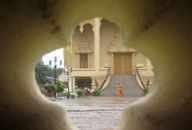
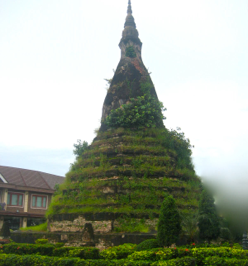
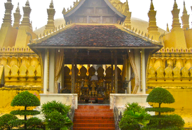
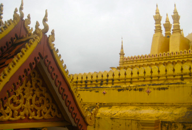
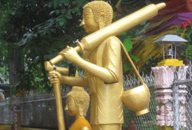
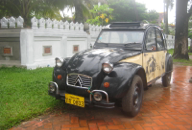
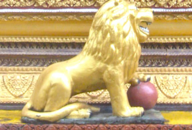
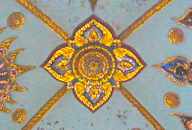
PHOTOS: Left Column: 1. Detail, stairway at Pha That Luang, the golden stupa. 2. Detail: interior of the domed ceiling, Lao styled, at the Patuxi or Victory Arch. 3. Lion sculpture decorating the exterior of Wat Si Muang. 4. View of Pha That Luang, from the upper tier. Center, Top: Patuxi, c. 1960’s. Vientiane’s most prominent monument. It was built of US purchased cement, which was earmarked for an airport. Besides being referred to as the Vientiane’s L’Arc de Triomphe, it is also nicknamed the “Vertical Runway”. Center, Bottom: That Dam or “Black Stupa” c. 14th century, Lang Xang Period. Legend tells that this stupa was once covered with gold, pillaged by the Siamese in 1828. Right Column: 1. Sculpture near the revered pillar at Wat Si Muang. 2. View of Lang Xang, Vientiane’s “Champs Elysée as seen from the gardens of Putaxi 3. View of the adjoining temple with Buddhist monk as seen through the pierced wall of Pha That Luang. 4. Evidence of the days of colonial French Indochine:, an old “Deux Cheveaux” parked adjacent to Wat Ong Teu Mahawihan, the wall of the temple compound in the background.

Capital City