gottlieben
District of Kreuzlingen, canton of thurgau switzerland
europe
february 2, 2010


gottlieben
District of Kreuzlingen, canton of thurgau switzerland
europe
february 2, 2010

Gottlieben is a precious village near the German border on the Rhine River on the south side of the Bodensee or Lake Constance. The name given it means “God’s Love” in German. Henry and I were thrilled to walk around this small village with our Konstanz friends, Agnes Joester and Eberhard Belz who drove us there. This couple showed Henry and me a village bearing the name of New York City friends of ours, Marty and Janet Gottlieb. The village was originally part of land owned by the Bishop of Konstanz. In 1251, Eberhard von Waldburrg built a castle that served as the residence of the Bishops. In 1499, after the Swabian War, the episcopal chief constable managed the village and low court from the castle until 1798. The court included the villages of Engwilen, Siegerhausen, Tägerwilen, and Gottlieben, under the bailiff’s jurisdiction of Gottlieben. The castle became private property in 1808 and was renovated in a Neo-Gothic style in 1837. Today, I was told, the castle is the home of an opera singer, now in her ninth decade of life. The village is locate on the Rhine River, and was economically successful in the 17th and 18th centuries because of the traffic on the river, trading in salt, iron, and wine. During the industrialization of the 19th century, small industries such as button making and horsehair spinning settled in the village. After World War II, tourism developed as the main industry of the village. Today two boat yards, several hotels and a famous restaurant, Hüppenbäckerai serve visitors to the area.
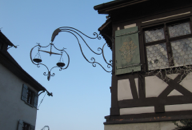
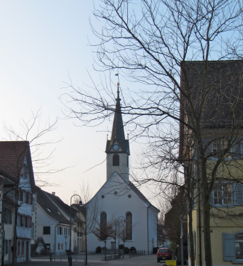
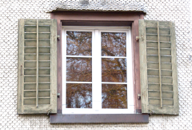
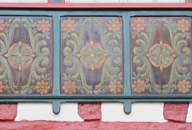
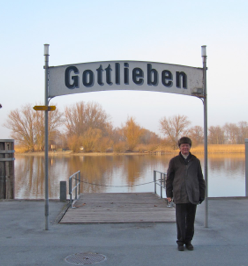
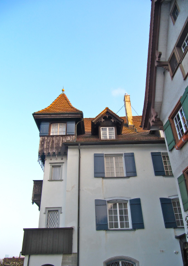
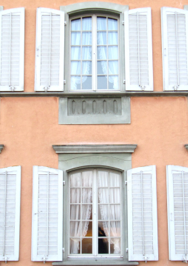
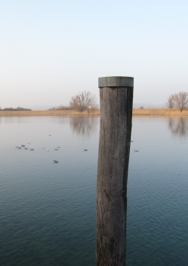
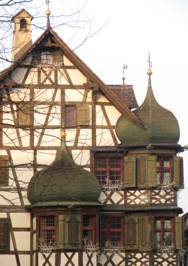
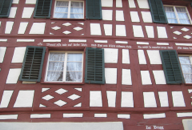
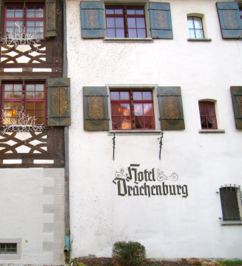
PHOTOS: Left Column: 1. Antique signage on one of Gottlieben’s hotels. 2. Detail: Half-timbered architecture. 3 Architectural details with painted designs and faded shutters. 4. Architectural details: Hotel Drachenburg. Center, Top: View of the small village of Gottlieben with the Swiss Reformed Church, built 1734-35 to serve the villagers that converted during the Protestant Reformation c. 1529. Center, Middle: Detail: Exterior façade of Hotel Drachenburg. Center, Bottom: Henry, beneath the dock sign on the Rhine River indicating the village of Gottlieben. Right Column: 1. The tallest building in the village, a hotel. 2. Architectural detail, one of the charming hotels in the village. 3. View of the Rhine River and a bird sanctuary near the village of Gottlieben.

“God’s Love”